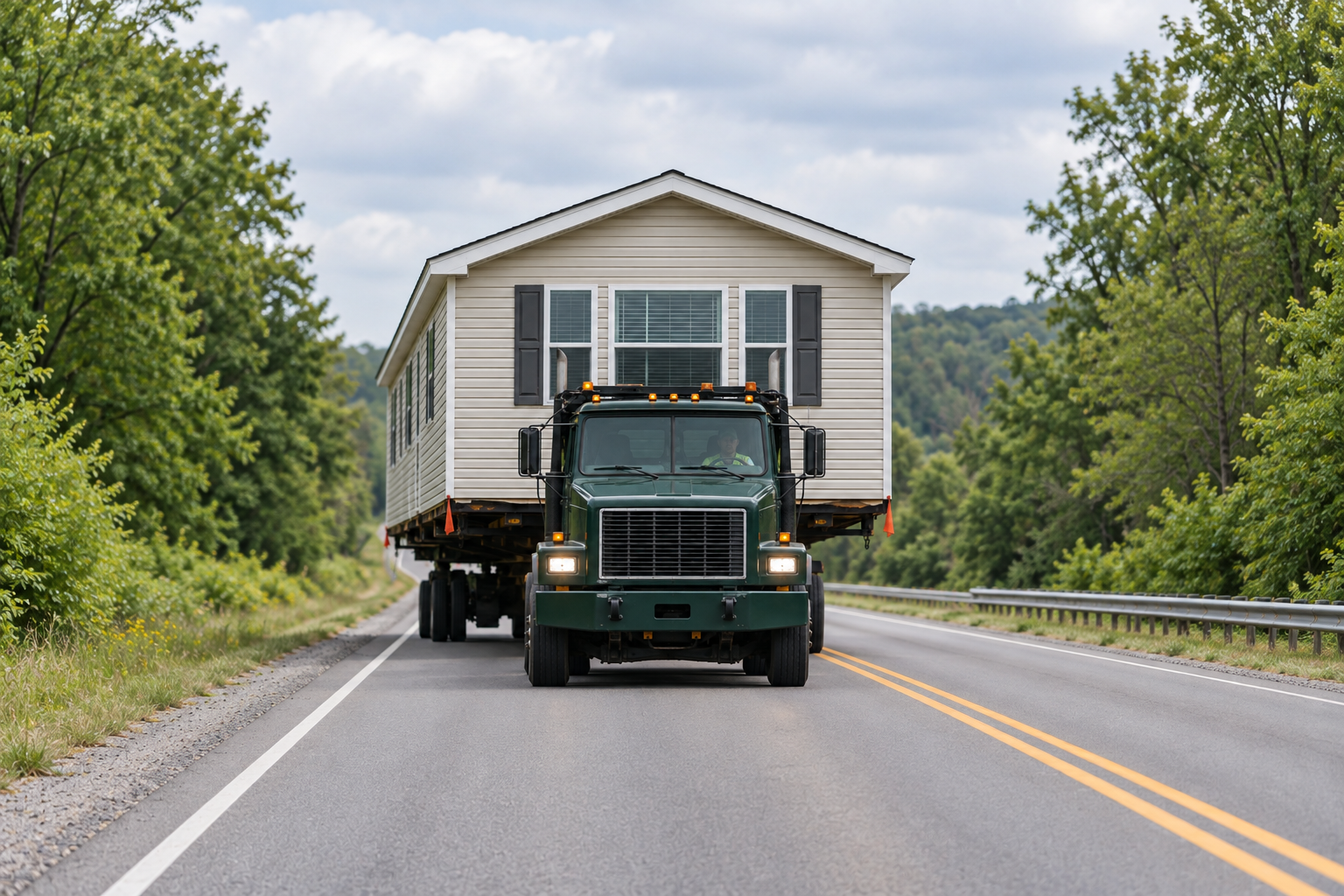
Modular home transport is usually a heavy-haul job for factory-built modules that are delivered to a site and assembled on a permanent foundation. It is not the same thing as towing a manufactured home on a permanent chassis. For a modular move, the critical inputs are the number of modules, module dimensions and weight, loading method, trailer type, route permits, escorts, unloading method and access to the foundation site.
HUD distinguishes modular homes from HUD-code manufactured homes. Modular construction follows applicable state and local building codes.
Modules are planned around their own size, weight, trailer, permits and placement sequence.
An already assembled modular home may require structural disassembly and engineering work before transport is even feasible.
Modular home vs. manufactured home transport
| Question | Modular home | Manufactured home |
|---|---|---|
| Construction standard | Built to applicable state and local building codes | Built to the federal HUD Code |
| Permanent chassis | Not defined by a permanent transport chassis | Designed with a permanent chassis for transportability |
| Typical delivery | Modules moved on transport equipment, then assembled on a permanent foundation | One or more home sections transported on the manufactured-home chassis |
| Move planning | Module dimensions, weight, trailer, crane or lifting plan, route and foundation sequence | Home sections, running gear, permits, route, escorts, placement and installation |
What modular home movers need to know
Each section may require separate equipment, permits and scheduling.
Length, width, height and weight determine trailer and routing options.
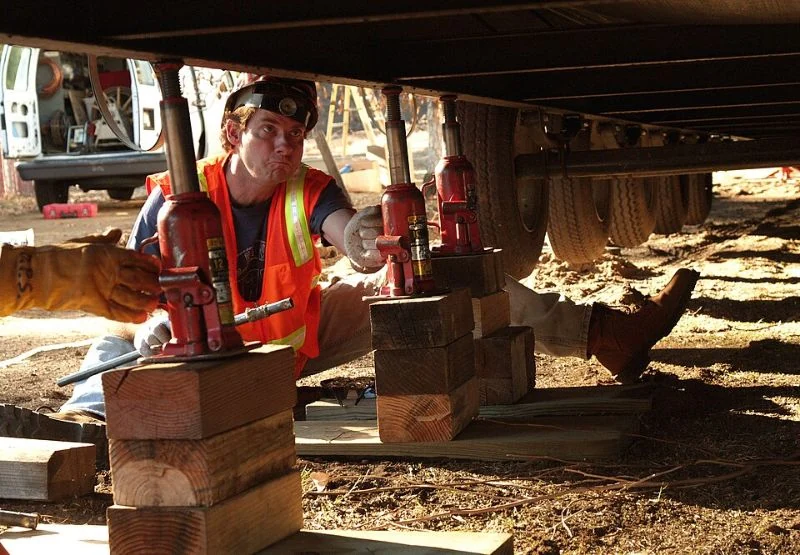
Factory loading, crane lifting, hydraulic systems or other methods must match the module and site.
The unloading or crane sequence must work with the prepared foundation and staging area.
Oversize permits, bridge clearances, turns, work zones and escort rules can change the route.
Truck and crane access, ground conditions, overhead lines and staging room matter at both ends.
Quote the modules, not just the house
For a useful modular transport quote, provide the module count, dimensions, approximate weight, origin, destination and how the modules will be loaded and placed.
Typical modular transport sequence
Confirm module size and weight.
Select a trailer and loading method.
Plan permits, clearances and escorts.
Move modules in the required sequence.
Unload or crane modules onto the prepared foundation.
Moving a new module is different from relocating an existing modular home
Factory-to-site delivery
- Module is designed and documented for shipment
- Loading points and dimensions are known
- Foundation and crane sequence can be planned in advance
- Transport is part of the construction delivery process
Existing assembled home
- Structure may need to be separated or dismantled
- Utility and foundation connections must be evaluated
- Engineering input may be needed before lifting or transport
- Feasibility should be established before a hauling price is treated as meaningful
Cost factors for moving modular sections
The cost of moving a modular home or module depends on the number of loads, dimensions and weight, travel distance, permits, escort vehicles, trailer type, crane or loading equipment and site access. Because an existing modular-home relocation can involve structural work beyond transportation, a generic per-mile figure is especially weak for this intent.
Sometimes, but do not assume it can be handled like a manufactured home. Modular homes are normally assembled on a permanent foundation and are not defined by a permanent road chassis. An existing-home relocation may require engineering, structural separation, lifting, heavy-haul transport and a new foundation plan.