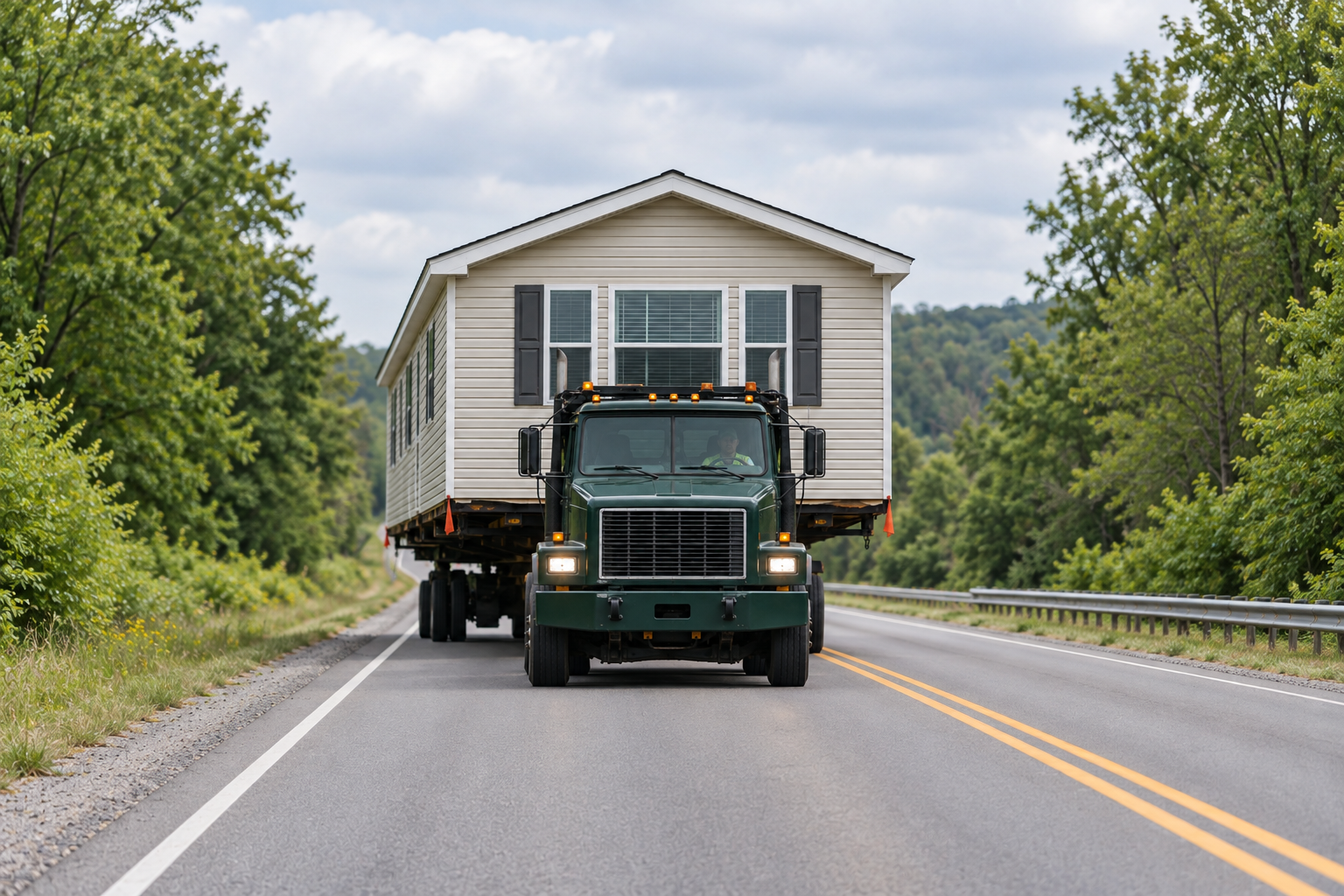
Ask Washington mobile home movers to assess each section as it will travel, including eaves and loaded height. Washington’s manufactured-housing rule distinguishes box width from overall width and places conditions on permit eligibility. A home’s advertised floor size cannot settle those transport questions.
Two width measurements can describe the same section
WAC 468-38-120 treats the box and overall width separately and addresses eave projections. It also distinguishes the eligibility for annual or monthly permits from single-trip movements. Let the provider apply the rule to the measured load and its equipment. WAC 468-38-120 manufactured housing
Share the home’s documented size and photos of the roofline. Identify anything that extends beyond the wall rather than leaving the mover to infer it from a listing.
Ask who will measure the loaded height with the proposed equipment. The height of a home in its current position is not necessarily its height on the road.
Describe all sections. Ask whether the provider’s quoted movements and escort allowances apply to each one.

Height can add a specific escort question
The rule calls for a front pilot vehicle with a height pole when the movement exceeds 15 feet in height. That threshold is not a substitute for checking the actual route’s available clearance. Have the transporter explain the resulting plan, rather than treating an escort as automatic route approval. WAC 468-38-120 manufactured housing
Request a Washington transport quote
Share the home details, both addresses and available dates. Ask the provider to confirm the transport scope and any route-dependent allowances.
Destination paperwork and transport are separate workstreams
Pierce County provides a local example: placement authority is addressed with the relevant planning office, while tax status and the moving certificate/decal involve the Treasurer. Ask the county responsible for your home which documents apply; do not assume every county uses identical steps. Pierce County moving manufactured home
This paperwork discussion does not expand the hauling service to installation or site preparation. Agree on where the transporter will hand over each section and who is responsible for the work that follows.
Use the quote to expose measurement assumptions
- Mark which dimensions came from a document and which were physically measured.
- Ask whether the proposal includes the escort arrangement for the measured load.
- Show both property entrances and any visible overhead obstacles.
- Identify who resolves an access problem before equipment is dispatched.
- Get the conditions for a route-related price change in writing.

The moving cost guide helps compare the same scope across providers. Use the moving guide to organize owner preparation around the provider’s transport plan.