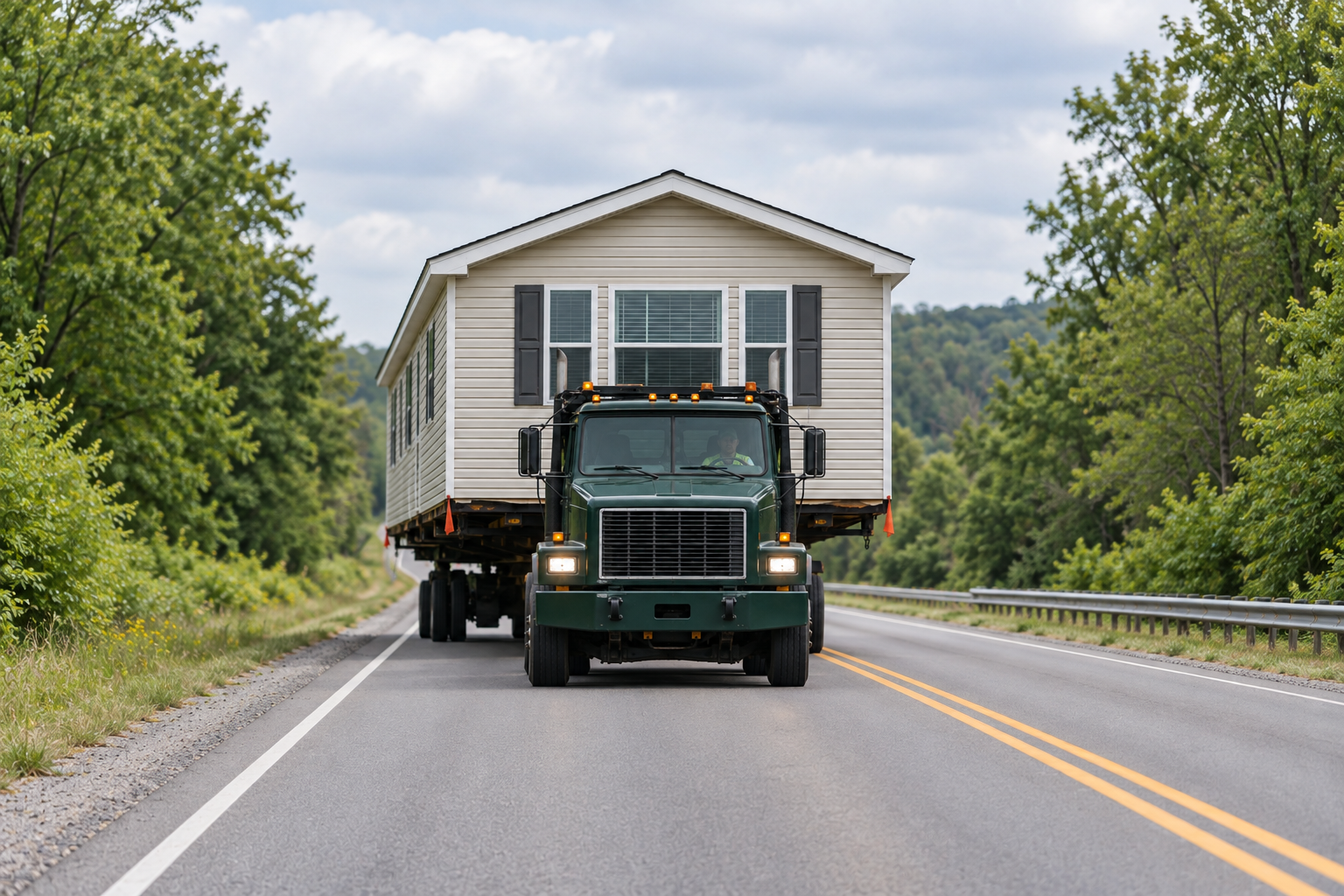
For a Florida mobile-home move, have the provider identify both its FDOT route-permit work and the approach to the property. FDOT's State Permit Office covers oversize and overweight travel on state-maintained roads. That scope does not settle every local-road or private-entrance question between the highway and the agreed delivery point.
State-maintained roads
FDOT handles the oversize/overweight permit layer for this part of the journey.
Defined trip
A trip permit describes a route-specific movement, rather than any route between two cities.
Approach and endpoint
The offer still needs to explain the non-state approach and the private receiving handoff.
Ask what “FDOT permits included” covers
The FDOT State Permit Office describes route-defined trip permits and other permit categories. Give the carrier the travel dimensions and number of home sections so it can explain the permission appropriate to its proposed operation. Do not choose a category simply because a different home used it previously.

Keep the route used for pricing visible in the proposal. If the receiving entrance changes, ask whether that affects the road sequence or access assumptions. An address correction should reach the person handling route work as well as the person discussing the price.
Follow the load from the state road to the home site
Leaving the state route
Identify the actual road connection in the provider's plan. Ask what permission or coordination is included for the transition it proposes.
Using the local approach
Name the street or park lane leading to the property. Have the provider explain any review still needed for that part of the journey.
Reaching the receiving position
Show the entrance and room for the equipment. Agree where the carrier hands over the home and who will be there to receive it.
This is a way to find an unassigned task, not a claim that every Florida delivery needs three additional permits. The actual route, road ownership and equipment determine which questions apply.
Get a Florida transport quote
Send the Florida home configuration, both addresses, travel dimensions and access details so the transport provider can price the actual route instead of a generic mileage estimate.
Make the service descriptions comparable
| Quoted item | Detail to establish |
|---|---|
| Road transport | Sections carried, pickup and delivery points, and the hauling configuration used for pricing. |
| Permit and escort work | What the provider arranges, what remains conditional and how additional route work is charged. |
| Property access | Whether assessment or any specified access work is included, with other work assigned separately. |
| Receiving handoff | The physical endpoint of transport and the person responsible for the next stage. |
Send access evidence with the route information

- Label photographs as pickup or delivery and include the corresponding address.
- Show the turn from the roadway, gates, overhead obstructions and the proposed equipment position.
- Identify unresolved entrance or receiving work and the person arranging it.
- Ask which item must be settled before the carrier confirms dispatch.
A driveway image does not establish clearance for the load, but it lets the provider explain what further assessment it needs. Compare written assumptions with the cost planning guide. The partner's transport inquiry does not promise installation, utility connection, site preparation or approval of the property project.