
For a Colorado manufactured-home haul, establish the home-record county and the proposed destination before coordinating pickup. County tax and moving documents are separate from road permission. Routt and La Plata publish useful examples of that division, but their local procedures should not be presented as one statewide county checklist.
Record location
Routt starts with the Assessor and Treasurer for home-record and moving-document work.
Destination branch
Its guidance distinguishes same-county, other Colorado county and out-of-state moves.
Road ownership
La Plata identifies Engineering for county roads and CDOT for state-highway permission.
Start with the office holding the home record
The Routt County moving guidance separates assessor notification from the Treasurer's tax authentication and moving permit. Give the responsible county the home's identification and explain where it is going. If your home is recorded elsewhere, obtain that county's instructions instead of applying Routt's fee or tax treatment to it.
Compare the identification in your ownership documents with the home being collected. A discrepancy belongs in the records discussion before it becomes an assumption in the hauling proposal. Ask which person will obtain the necessary documents and report when they are complete.
A new destination can change the county conversation
Within the county
State that the receiving address remains in the same county. Keep that address with the record-office response so a later change is visible.
Elsewhere in Colorado
Identify the receiving county. Ask how the applicable document or tax process changes when the home leaves the original county.
Out of state
Describe the interstate destination explicitly. Do not keep using an answer obtained for a move that stayed within the county.
These are the destination distinctions in Routt's guidance. They explain why the destination is part of the document inquiry, not just a mileage input.
Request a Colorado transport quote
Share the home details, both addresses and available dates. Ask the provider to confirm the transport scope and any route-dependent allowances.
Match the task to the road or records authority
The La Plata manufactured-home guidance identifies several offices with different responsibilities. Use the distinction below to clarify who is dealing with each part of your own move.
| Subject | Office identified | Planning distinction |
|---|---|---|
| Title and home records | Relevant county records and motor-vehicle offices. | A records action does not establish a hauling route. |
| Tax position | County Treasurer. | Keep tax-document readiness distinct from equipment availability. |
| County-road movement | County Engineering. | Identify the actual county-road portion of the journey. |
| State-highway movement | CDOT. | Describe the carrier's state-road permit work separately. |
Agree on the condition that controls dispatch
Three different answers can remain outstanding: whether documents are ready, whether the carrier has completed route review, and whether the home can be collected from its present position. “Waiting for a permit” is too vague if the owner and dispatcher mean different documents.
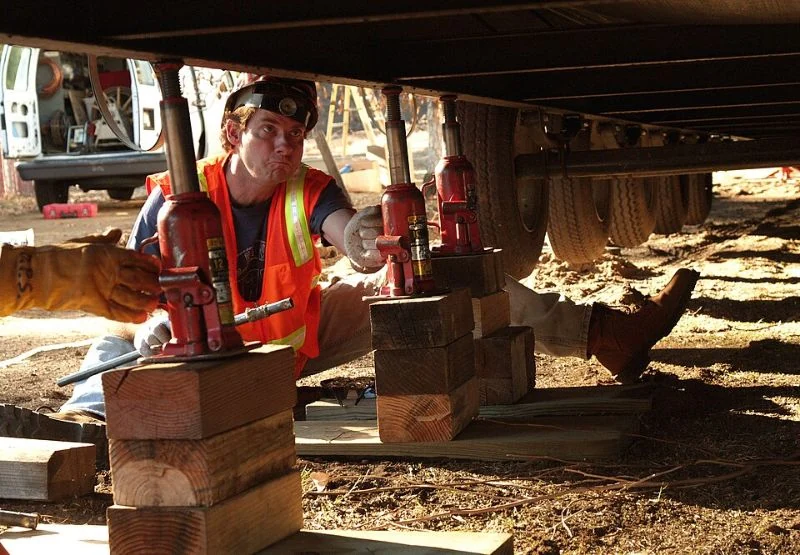
Ask the provider what it needs to inspect at the pickup property. Describe the chassis and running-gear condition you know, while identifying anything that still needs its assessment. Keep that transport-readiness check separate from installation work assigned to another party.

- Record the specific unfinished document or review, its responsible party and the next action.
- Send the actual entrance and delivery position, not only the nearest road address.
- Ask when the carrier can reserve equipment and how it handles a missed readiness date.
Use the cost guide when comparing owner-paid paperwork and transport charges. A hauling estimate does not approve placement, connect utilities or arrange preparation of the receiving property.