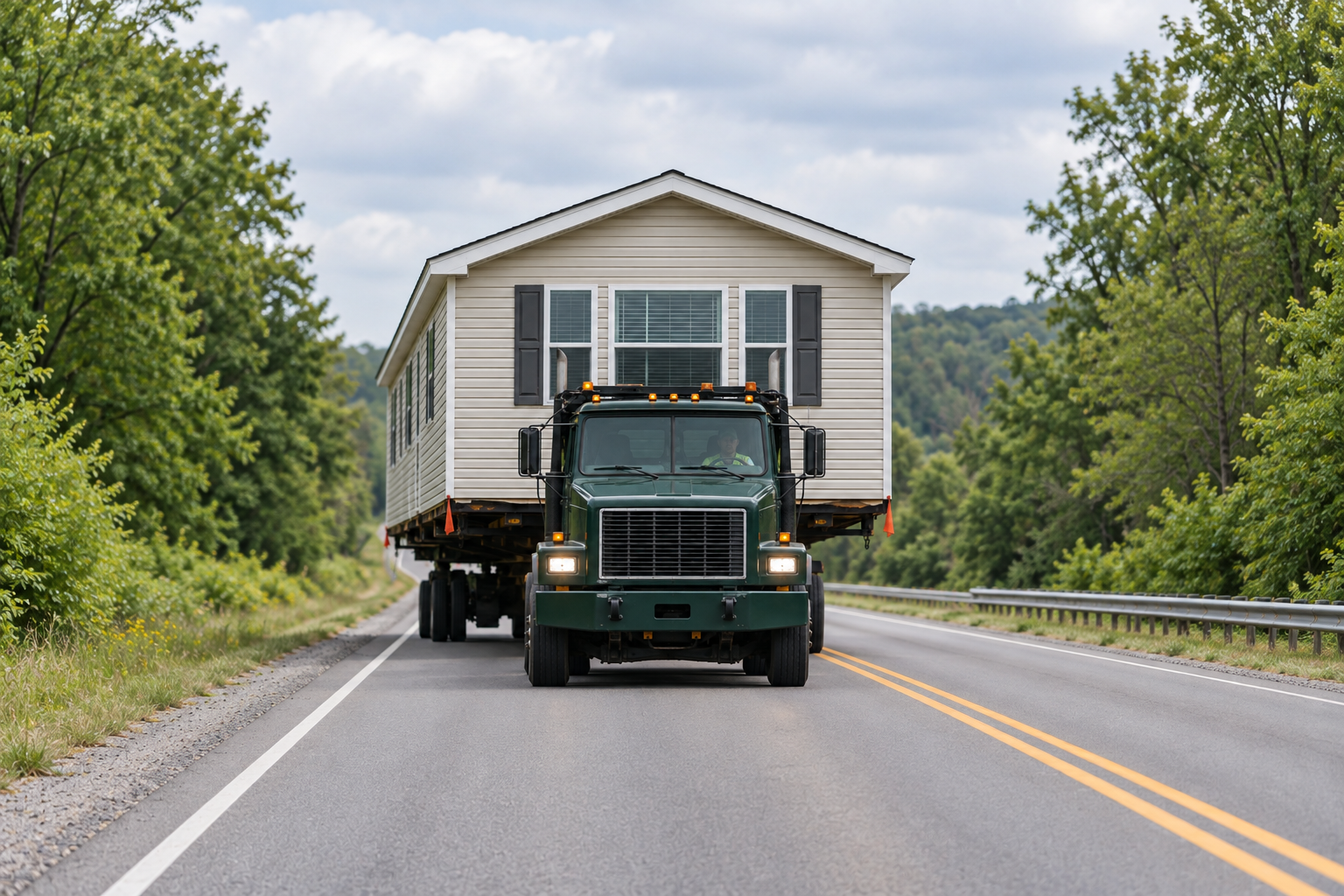
For an Albuquerque mobile home move, ask the transporter to check city escort and time-of-day conditions against the loaded size. A preferred delivery time is only a request until the provider has reviewed the route and the applicable permit conditions. Share the dimensions of each traveling section, not just the home’s advertised floor size.
Albuquerque’s instructions distinguish larger vehicles from other oversize movements. Have the hauler check the complete transport combination.
The city has peak-period escort and movement conditions. Do not treat your preferred arrival time as an approved travel slot.
The city asks for two business days for approval. Build review into planning without treating it as guaranteed issuance.
Match the load to the city’s timing conditions
The Albuquerque oversize vehicle permit instructions gives the following distinctions. Ask the transporter to confirm how they apply to the loaded vehicle and issued permission, rather than reading a width from the home’s sales listing.
| Load category | Escort and time condition |
|---|---|
| Exceeds 65 ft long, 12 ft wide or 14 ft 6 in high | Escort required at all times; no city-street movement during 7-9 a.m. or 4-6 p.m. |
| Other oversize vehicles | An escort is required for city-street travel during 7-9 a.m. or 4-6 p.m. Check the applicable permit for the actual movement. |
The instructions also require route selection that minimizes traffic interference and avoids streets prohibiting trucks. The carrier must therefore consider the city approach as part of the schedule. Highway travel time alone does not tell the receiving owner when a section can reach the property.

Build an arrival plan with room for review
- Give the carrier a preferred date range and explain any restriction on when someone can receive the home.
- Have the provider establish the loaded dimensions and propose a city arrival window.
- Ask who submits the city application and confirms the necessary escort arrangement.
- Agree how the receiving contact will be told the movement is cleared and the arrival window is confirmed.
If the home cannot arrive in the original window, ask the provider to explain the revised plan and any price effect before pickup. Do not assume the driver can simply wait on a nearby street. Any waiting or staging arrangement should be addressed by the transport provider for this trip.
Request a quote with a workable arrival window
Include the pickup and delivery addresses, approximate section dimensions and date flexibility so the provider can assess the city portion of the trip.
Give the hauler measurements it can verify
Supply the section count and available length, width and height information. Mark approximate figures clearly so they are not mistaken for confirmed transport measurements.
Ask the carrier to establish how the towing equipment and projections affect the complete load. Advertised living area is not a substitute for those dimensions.
Use the same home information when comparing providers. If one proposal assumes a different configuration, ask what that changes in the permit, escort and schedule planning. This makes a meaningful comparison possible without guessing a local per-mile rate.
Check the entrance and receiving handoff
Send an approach photograph that shows the turn from the road, together with the gate and any apparent overhead obstruction. Mark the intended entrance rather than relying on the map pin. Let the carrier decide what further access verification it needs before moving the section.

Ask who will receive the home and whether separately arranged site work is ready. Use the New Mexico hauling guide for the state-road context, then ask the hauler how that leg connects to the city portion. Keep installation, utility work and site preparation outside the transport scope unless separate arrangements expressly cover them.