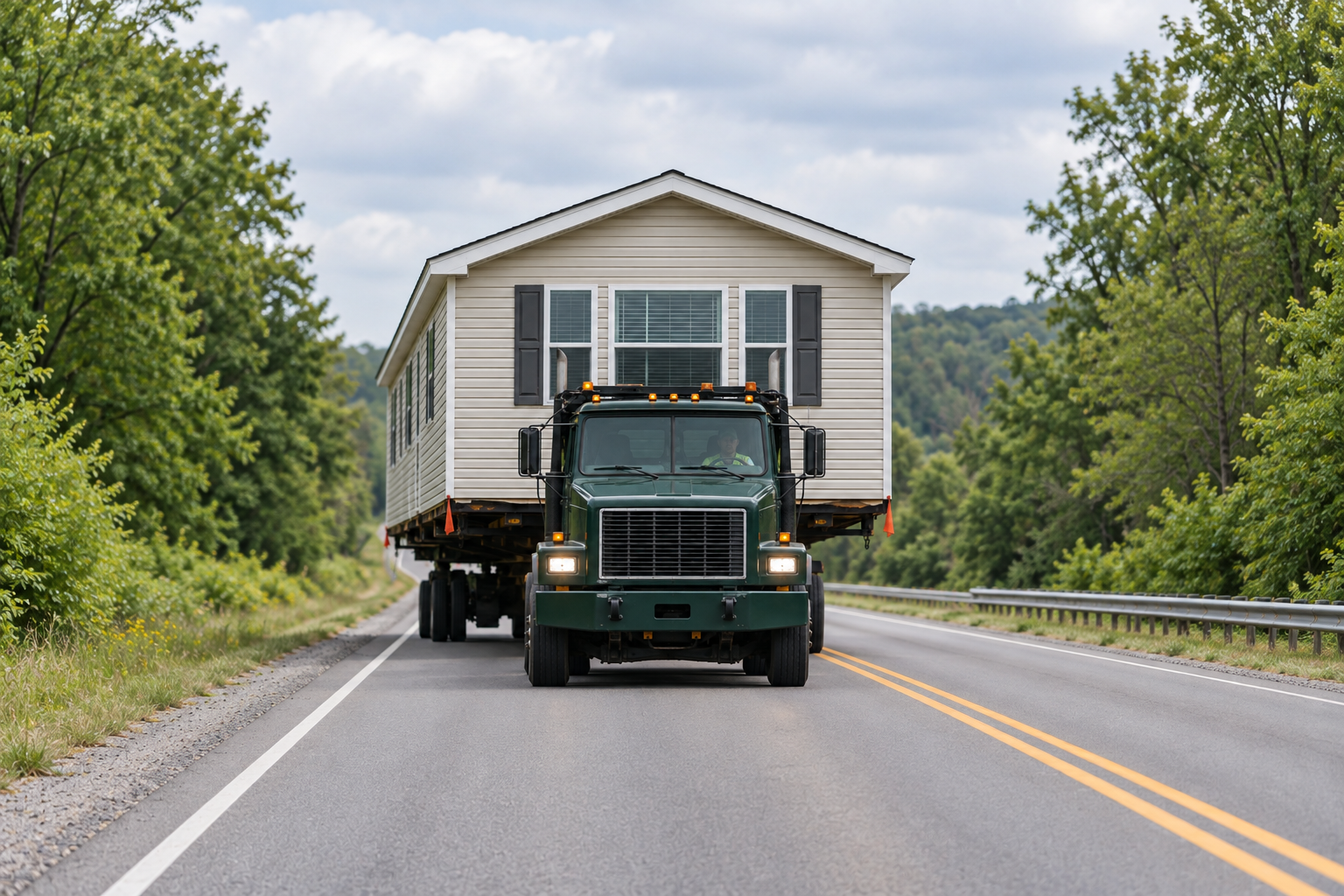
Have the carrier confirm the Shawnee moving-permit arrangements with Public Works, OG&E and the Police Department before city street or alley entry. The city’s linked form says the permittee will await a police representative for an escort if needed. Establish that coordination before dispatching the home through town.
The linked city form names Public Works, OG&E and police. Assign the notifications before the home reaches a city street.
The form provides for a police escort if needed. Confirm the arrangement instead of assuming a permit means an escort is booked.
Identify unfinished release work at the origin. Tell the hauler what is ready and which party still has work to complete.
Turn the moving form into a street-entry plan
The Shawnee moving-permit application is the starting document for the coordination described here. Use the Shawnee permit application directory to confirm the current submission route and contacts. A saved copy from an earlier move is not a reliable contact list. Ask the carrier to name the person handling city coordination so the owner, permittee and driver are working from the same plan.
| Handoff | Question for the responsible party |
|---|---|
| City coordination | Who has contacted the city about the proposed street or alley entry, and what instructions were received? |
| Utility release | Which release or disconnection tasks remain at pickup, and who will confirm completion? |
| Possible police escort | If an escort is needed, who confirms the meeting point and tells the driver when to proceed? |
| Driver briefing | Who passes the confirmed route and entry instructions to the person moving the home? |
Keep a short written record of those answers. The purpose is to prevent a gap between obtaining paperwork and being ready to use the street. If a handoff is still open, identify it as a condition in the quote request rather than describing the move as ready for immediate pickup.
Explain where the home enters Shawnee
Share the origin, destination and loaded size with the carrier. Ask who will handle city notifications and how any required escort will be coordinated.
Show the carrier the actual street connection
Photograph the path from the home to the street, including the first turn. Mark the intended exit if the property has more than one opening.
Show gates, parked vehicles and visible overhead obstructions. Ask the carrier to assess the loaded combination; do not judge clearance from a car trip.
Identify where the transported section is expected to stop and who can open the destination. A street address alone can leave that handoff unclear.
If the exit, destination or date changes, send the update to the carrier and ask whether city coordination must be revisited.
Prepare one consistent brief for the quote
- Give both street addresses and distinguish the pickup contact from the receiving contact.
- List the number of home sections, available measurements and any measurements the carrier still needs to verify.
- Attach origin and destination access photographs, with the planned entrance clearly marked.
- State whether utility releases and the city-entry arrangements are confirmed or pending.
- Ask which permit-handling, escort and waiting items are included in the written transport scope.
Do not convert an approximate home dimension into a certified loaded measurement. Send the information you have, label estimates and let the transport provider establish what is needed for the actual equipment. That gives the provider a useful basis for a quote without concealing uncertainty.
Separate the haul from work at the property
Request a clear description of where the transport service starts and ends. Disconnection, installation, foundations and utility work need their own arrangements. The city moving form does not make those services part of the hauling quote. Before agreeing on dispatch, check that the receiving person understands the same endpoint as the carrier.