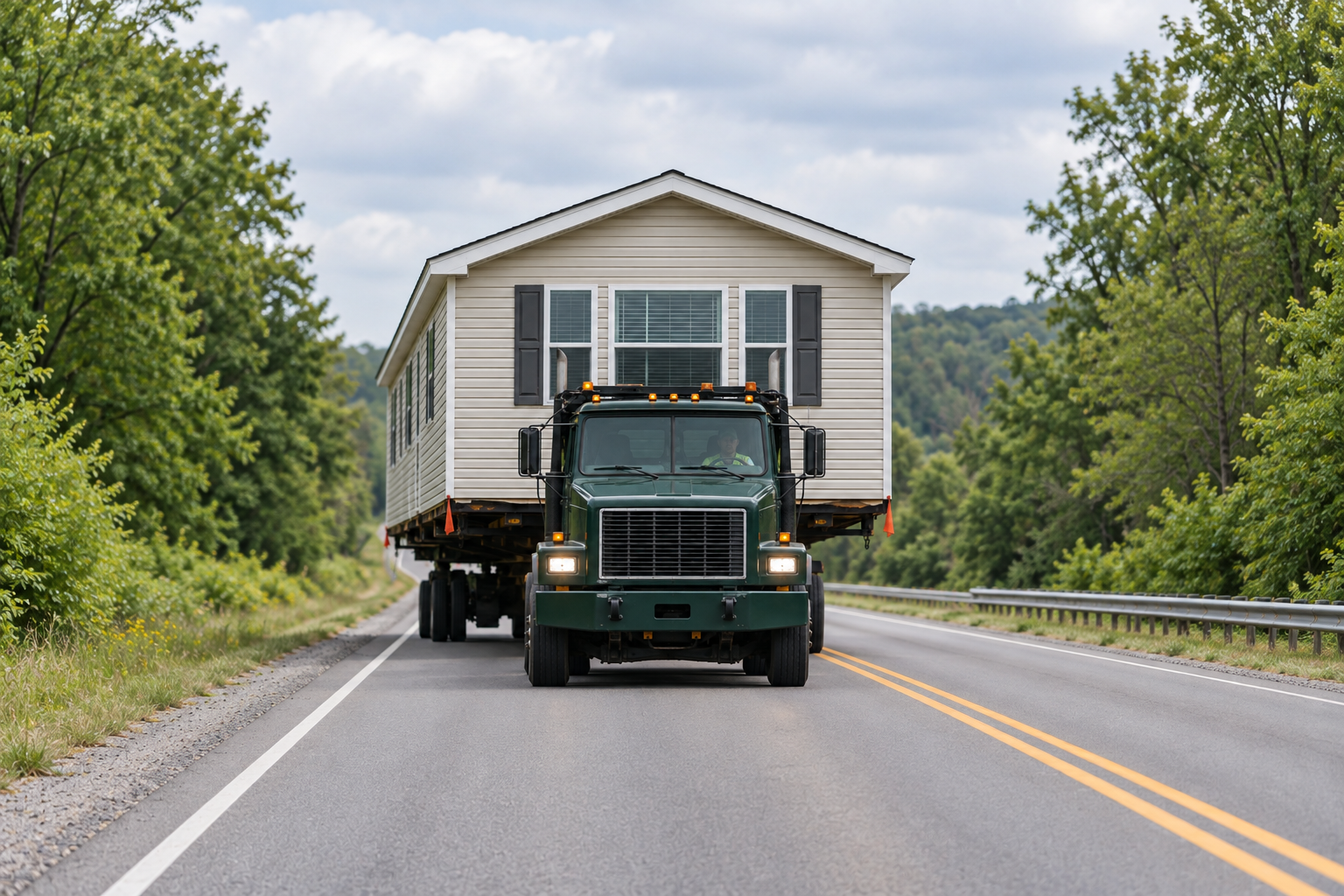
If the intended Seneca destination is a secondary dwelling on a lot with an existing house, resolve the proposed use with Planning and Development before arranging delivery. The city’s zoning ordinance says a manufactured home cannot be used as an accessory dwelling unit, or ADU. Available yard space alone does not establish an eligible destination.
Seneca’s ordinance excludes manufactured homes from accessory dwelling unit use. Clarify that issue before booking a backyard delivery.
Give Planning and Development the parcel and manufactured-home classification. A nickname such as guesthouse does not answer the use question.
A carrier needs a usable destination. Yard space and an available truck do not establish permission to place the home.
Which destination situation are you describing?
Section 711.6(l) of the Seneca zoning ordinance addresses accessory dwelling units. It does not support a blanket statement that every manufactured-home movement in Seneca is prohibited. Use the proposed activity to frame the question you take to the Seneca planning and development page.
Explain that the proposed unit is a manufactured home and would be secondary to the existing dwelling. Resolve the ADU restriction before treating this as an available delivery destination.
Ask staff to examine the parcel and the proposed replacement. The presence of a home today should not be treated as automatic approval for a different one.
Tell the hauler that this is an outbound move and identify the separate receiving address. The destination-use question belongs to the place the home will go.
Provide the parcel reference and a plain description of the intended use. Ask which office must decide it before converting a tentative location into a firm booking.
These are questions to resolve, not four equivalent approval routes. Keep the city’s answer with the property information and tell the carrier if the destination is still conditional. Avoid paying for a transport arrangement built around a receiving point that has not been established.
Confirm the receiving use before requesting a haul date
Once the receiving property and permitted use are settled, provide the carrier with the exact address and home dimensions. The transport request does not secure zoning acceptance.
Take a useful property brief to planning staff
- The receiving address and parcel reference, plus the owner or authorized applicant’s details.
- Whether another dwelling is already present and how the arriving home would be used.
- The home’s available identification and classification records, without substituting the term modular for manufactured.
- A sketch showing the intended position, existing buildings and proposed entrance.
- A direct question about what must be resolved before you commit to delivery.
Record the answer to the specific proposal rather than a general comment about mobile homes. If the proposal changes, explain what changed. For example, moving to another lot creates a different receiving question even when the same home and carrier are involved.
Once the destination is settled, check physical access
Send photographs showing the entrance turn, gate and visible obstructions. Ask the carrier what it needs to verify for the section being moved.
Identify where the section will be received and which person can authorize access. Tell the provider if separate site work is unfinished.
Planning acceptance and practical access answer different questions. Neither a large yard nor a favorable property discussion measures the available turning room. Let the transporter assess the actual approach and state any access assumptions in its proposal.
Keep the quote tied to transport
Ask for the number of sections included, the pickup and delivery points, and the arrangements that must be complete before dispatch. Installation, site preparation and utilities remain separate work. If the receiving use has not yet been resolved, describe the quote as preliminary and ask what information will be needed to make it firm.