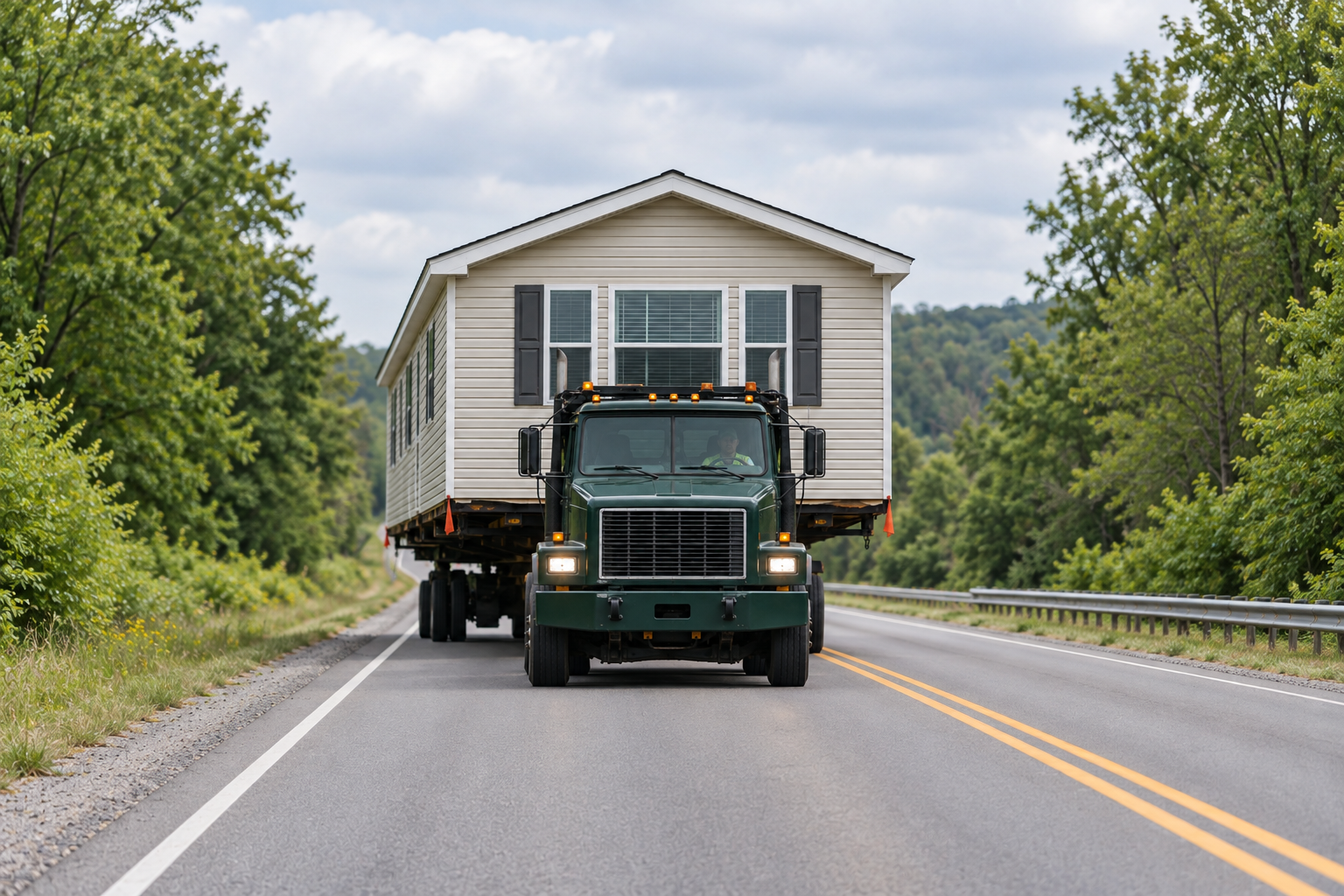
For a home move covered by Eau Claire's house-moving process, the city reviews the route and timing across several departments. Its moving application also asks about obstructions and permission to move interfering property. Confirm the process for the actual loaded home, then coordinate those permissions separately from the city's permit.
Start with the load the city will actually review
The Eau Claire inspection applications page links the Eau Claire moving-permit application. The application records the building's height when loaded, approximate weight, proposed route, travel time and known obstructions. City reviewers can require changes to the route or schedule, so an application date should not be treated as a confirmed moving date.
Ask Inspection Services which requirements apply to the particular home. The Eau Claire business licensing code includes a limited small-building exception to the house-moving license and permit requirements; the relevant measurements must be checked before relying on it. The current Eau Claire licensing page also identifies the house-mover licensing process.
Share the Eau Claire route constraints with the transporter
Provide the loaded height, origin and destination, and any known wires, trees or parked-vehicle constraints. Identify who will arrange permissions and clearance work.
Separate permission from physical clearance
The moving form asks whether affected private owners or utility companies have been notified, whether permission to move interfering items has been secured, and who will pay the resulting costs. A city moving permit does not itself authorize damage to or movement of someone else's wires, poles or trees.

Record each obstruction against the proposed route and identify its owner and the party responsible for resolving it. If a reviewer changes the route, check that record again: permission obtained for one street may not address the obstacles on another. Keep utility work, property restoration and installation responsibilities distinct from the transport request.
