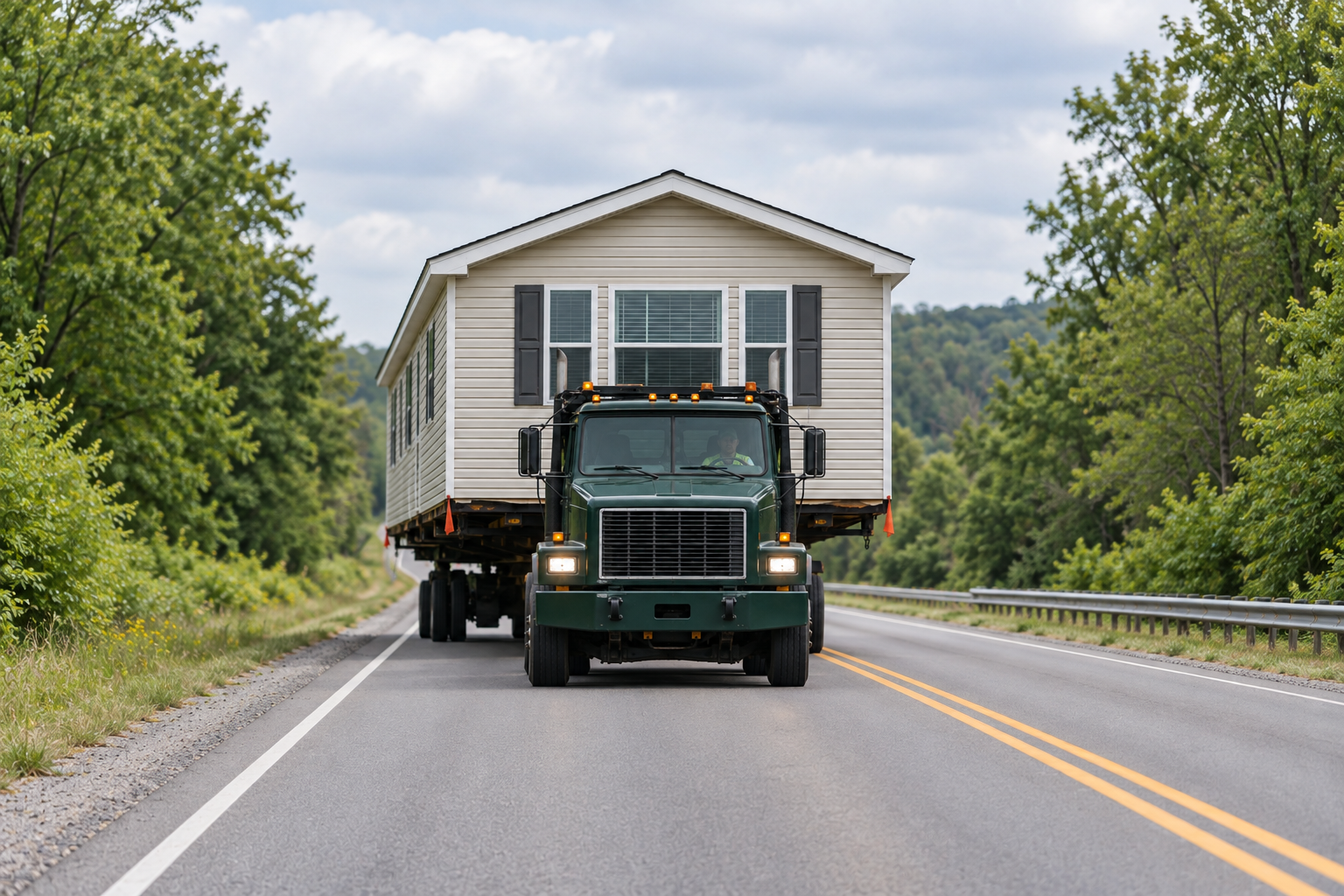
A useful California mobile-home transport quote identifies the route and escort assumptions behind its price. Caltrans pilot-car maps connect road conditions with the load dimensions, while a single-trip permit authorizes a directional movement. Compare those details before treating two mileage estimates as equivalent offers.
Route-specific escorts
District pilot-car maps use route colors and legends, together with load dimensions.
One-way permission
The single-trip permit covers the stated origin-to-destination movement.
Seven-day validity
Seven consecutive permit days do not establish the carrier's promised pickup or delivery day.
Give the route reviewer transport measurements
The width of a finished home is not necessarily a usable description of an individual traveling section. Send section-specific measurements and identify what is still an owner estimate. Let the transporter explain how it will verify dimensions for the loaded operation.
The Caltrans pilot-car maps are organized by district. Ask which map, route and load assumptions support the escort allowance. You are not being asked to select the safest road yourself; the purpose is to establish what the provider has actually priced.

Distinguish the outward trip from return equipment
Caltrans describes its single-trip permit as one-way and valid for seven consecutive days. An extralegal return movement needs additional permit authority. Ask whether the quoted operation includes such a return, rather than assuming that every returning truck needs the same permit as the loaded home.
For several home sections, have the offer identify the movement count and any separate collection dates. If a provider's return or repositioning charge is unclear, ask what equipment movement it represents. That makes the explanation useful without inventing a universal return-permit cost.
Request a California transport quote
Share the home details, both addresses and available dates. Ask the provider to confirm the transport scope and any route-dependent allowances.
Compare the unresolved allowances side by side
| Item | A comparable answer | If still provisional |
|---|---|---|
| Loaded dimensions | Measurements tied to each traveling section. | Who verifies them and when the price can change. |
| Route and escorts | Identified route assumptions and escort scope. | What route review remains before the allowance is confirmed. |
| Return movement | Equipment and permit work included in the return charge, if applicable. | Which part of that movement is not yet established. |
| Travel dates | The provider's booking conditions distinguished from permit validity. | How a missed window affects scheduling and charges. |
Check both property approaches before fixing the handoff
A route proposal can be developed while access information is still incomplete. Do not let a highway discussion conceal an unresolved turn into the pickup property or receiving lot.

- Photograph the road-to-property turn, gate and space where towing equipment would line up.
- Identify visible overhead lines, trees and parked obstructions for the provider to assess.
- Name the party responsible for any agreed access work and the point at which the home will be received.
Keep photographs of pickup and delivery separate and label their addresses. If the receiving position changes, return that information to the provider before accepting the previous access assumptions. The moving guide covers the wider preparation sequence; installation, utilities and site preparation are not promised by this transport inquiry.